
Tattoo cover-ups & corrections
Not every bad tattoo needs to disappear. Some just need someone who knows how to fix it.
Low contrast that turned into a blur. Lines that blew out. Colours that went muddy after healing. Details that were fucked up from day one. Correcting these needs sound technical knowledge, not just a bigger, darker design on top.
I assess what's already on your skin, what can be saved, and what needs to be reworked. Sometimes it's a correction, sometimes a partial rework, sometimes a full cover-up. We decide that together, in person, once I can see the task at hand.
My colour packing technique has proven especially good on tattoos with skin damage, where the ink slightly rises above the skin. That's exactly where most rework jobs struggle.
I currently teach my cover-up techniques to the resident artist at InStyle Tattoo Studio.
Questions
Can a bad tattoo be fixed without covering it up?
Sometimes, yes. It depends on what went wrong and how your skin has healed. I'll try my best once I see it and can assess the task at hand.
Around 500 success stories of people who have rediscovered their love for tattoos with my clean, long lasting cover up projects.
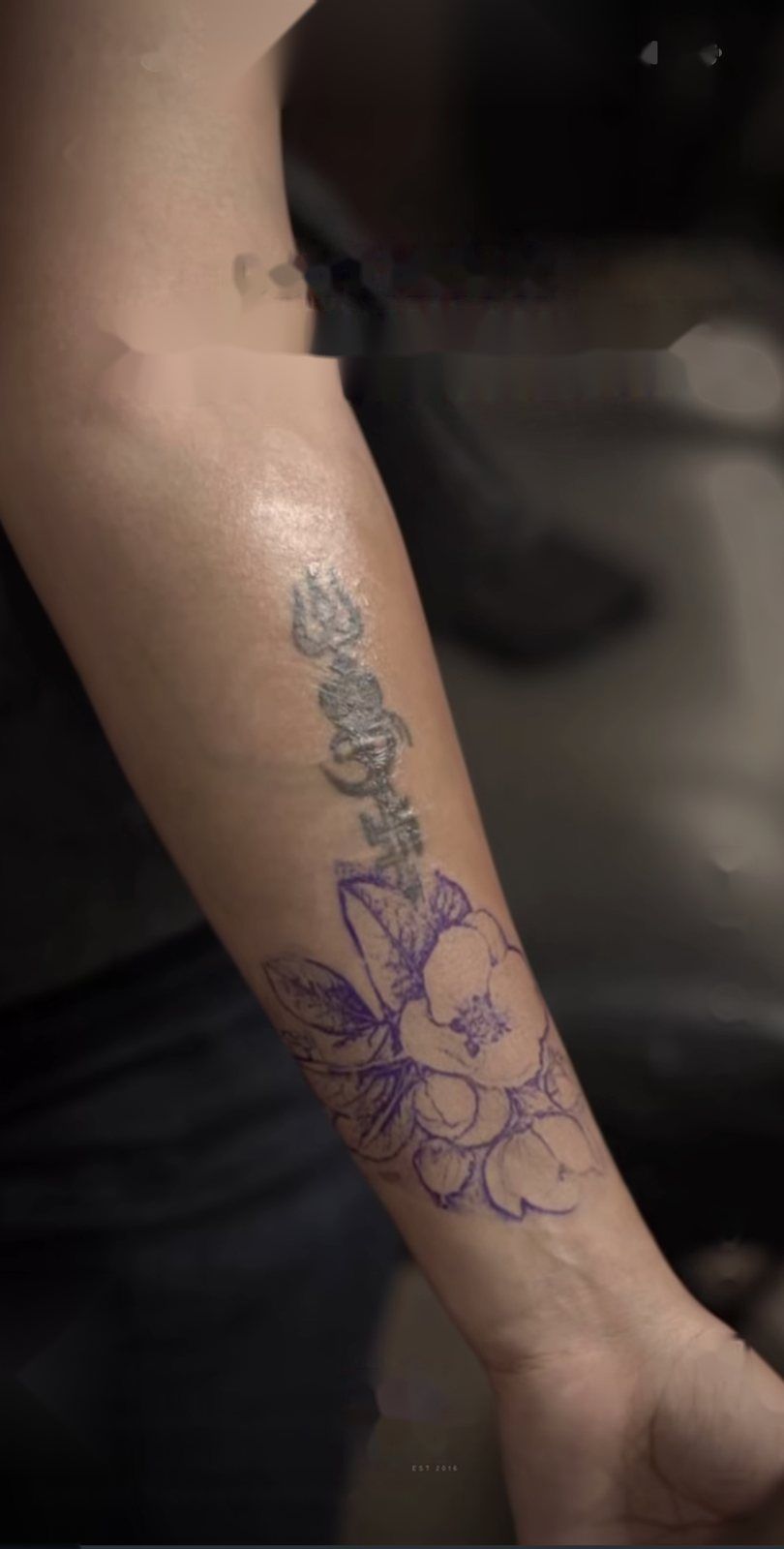
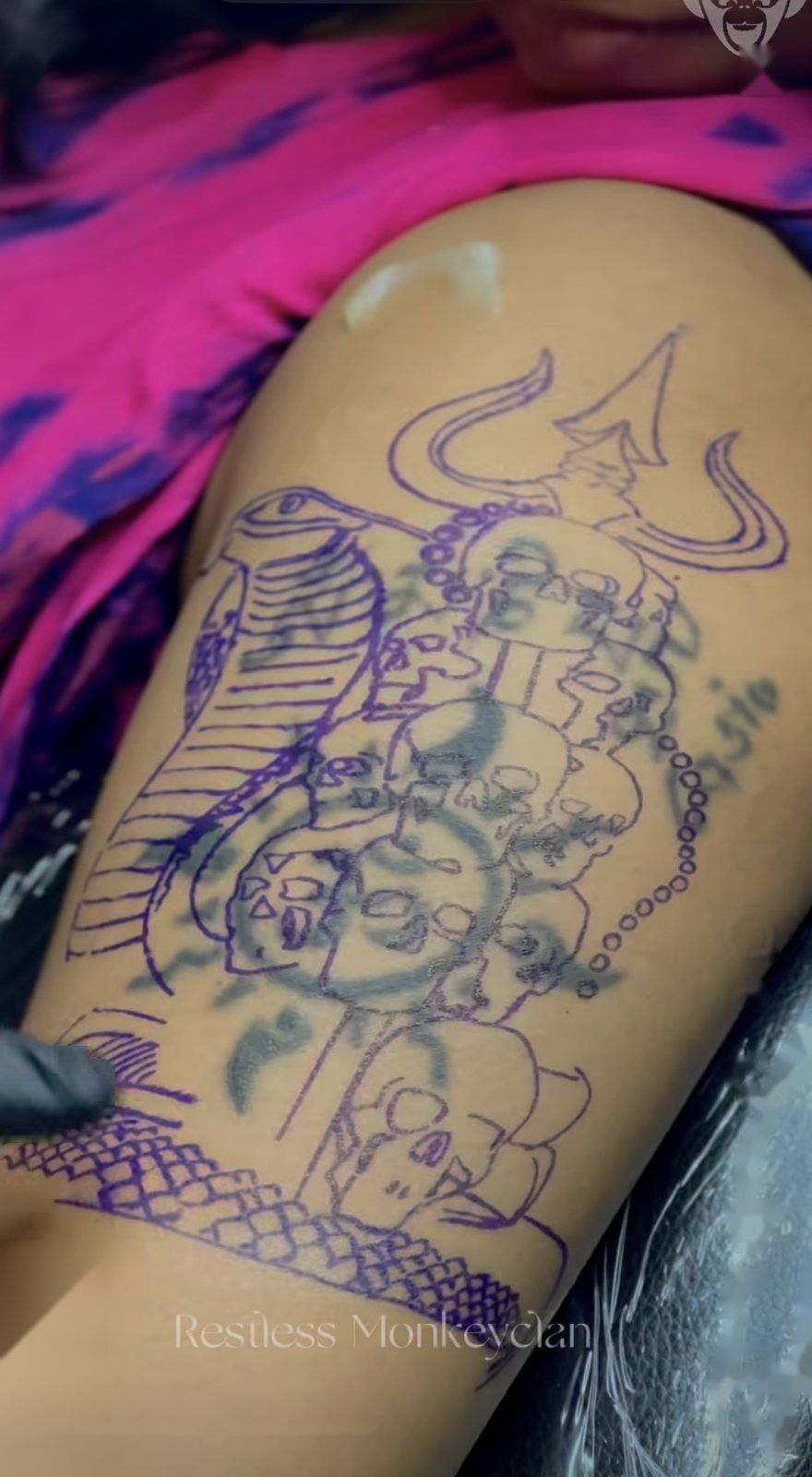
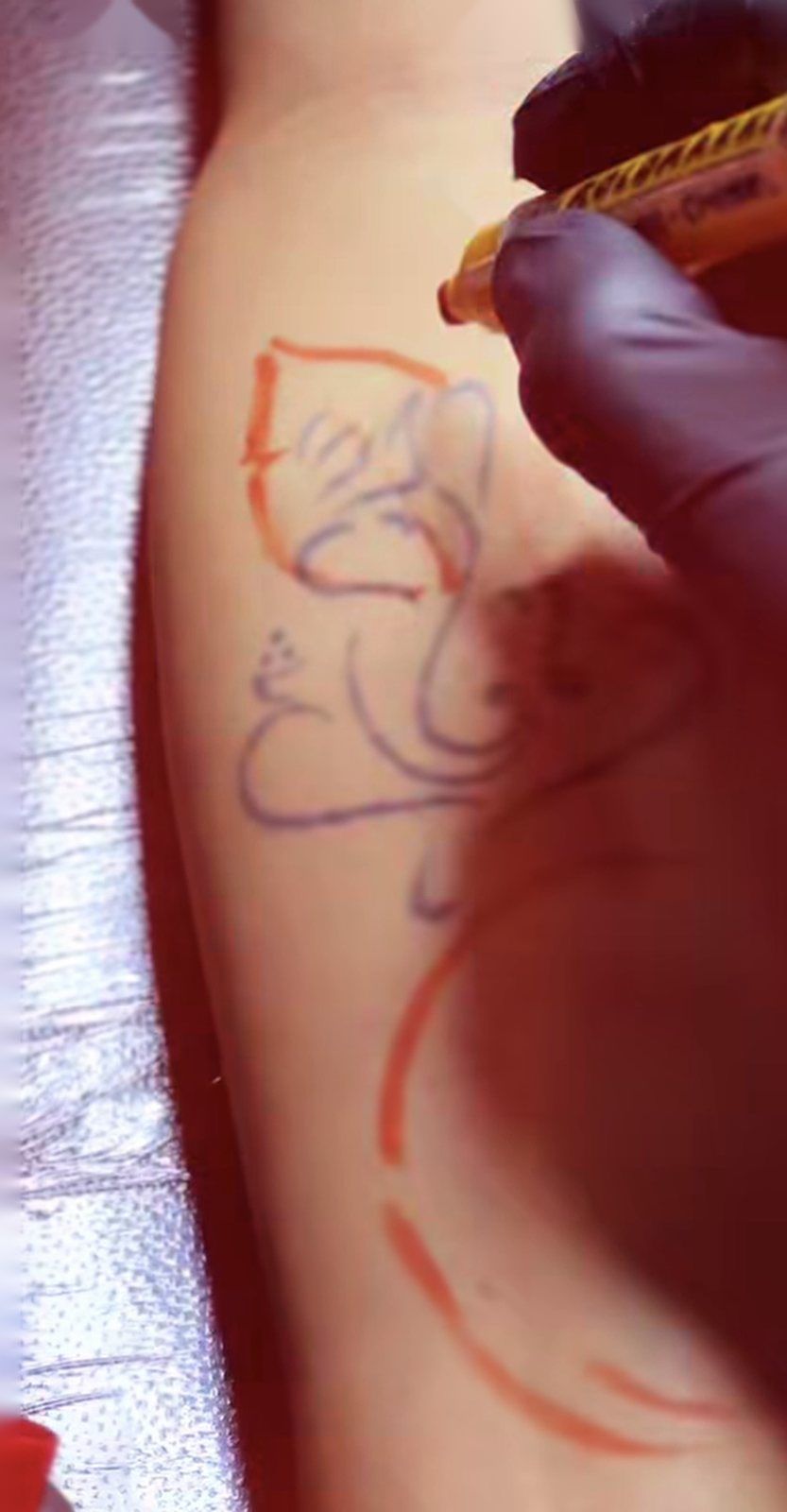
The hard ones
- Skin damage, where the ink slightly rises above the skin
- Low contrast issues
- Fucked up details
- Covering up a messed-up cover-up job, which becomes almost impossible at a large scale
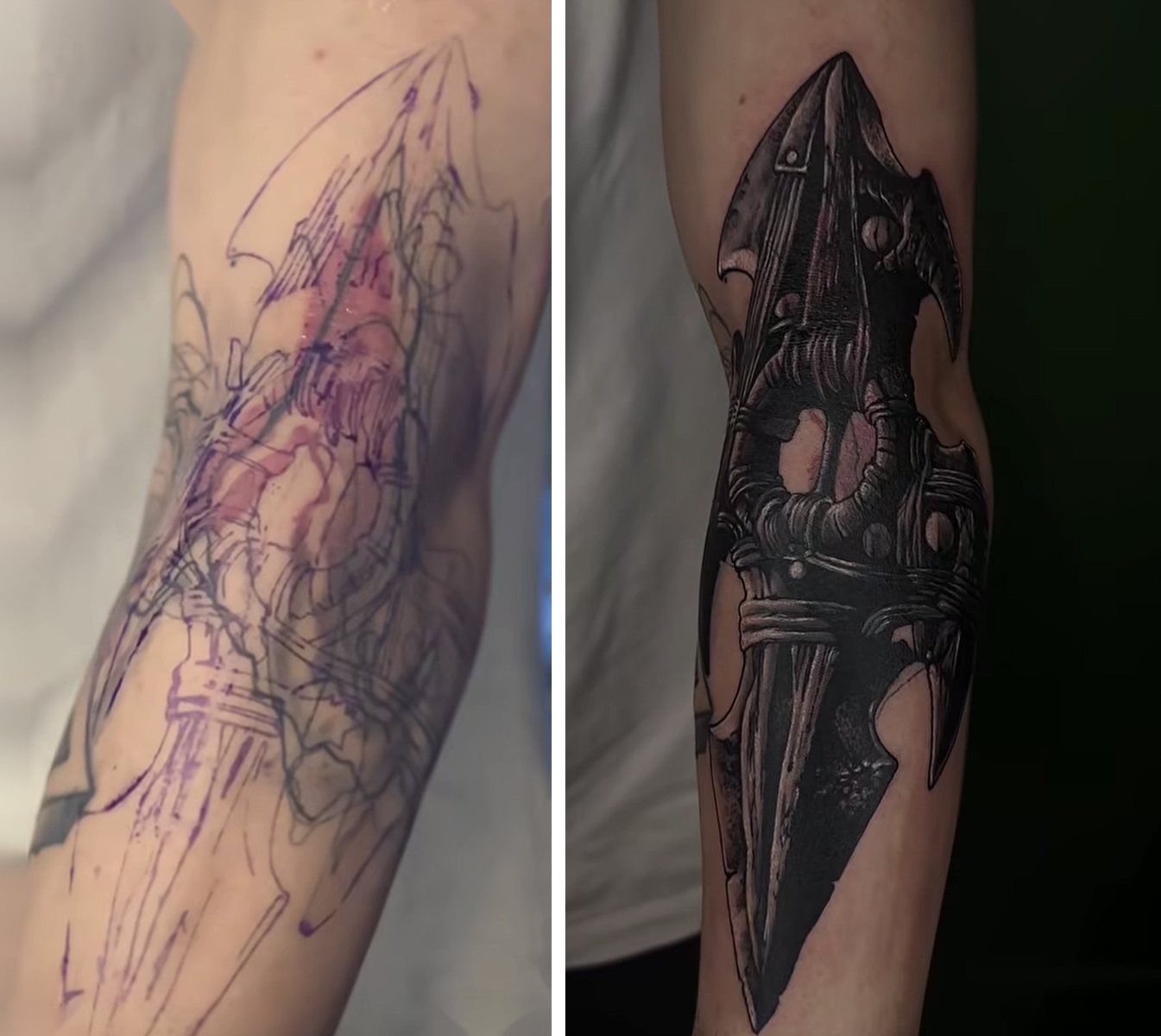
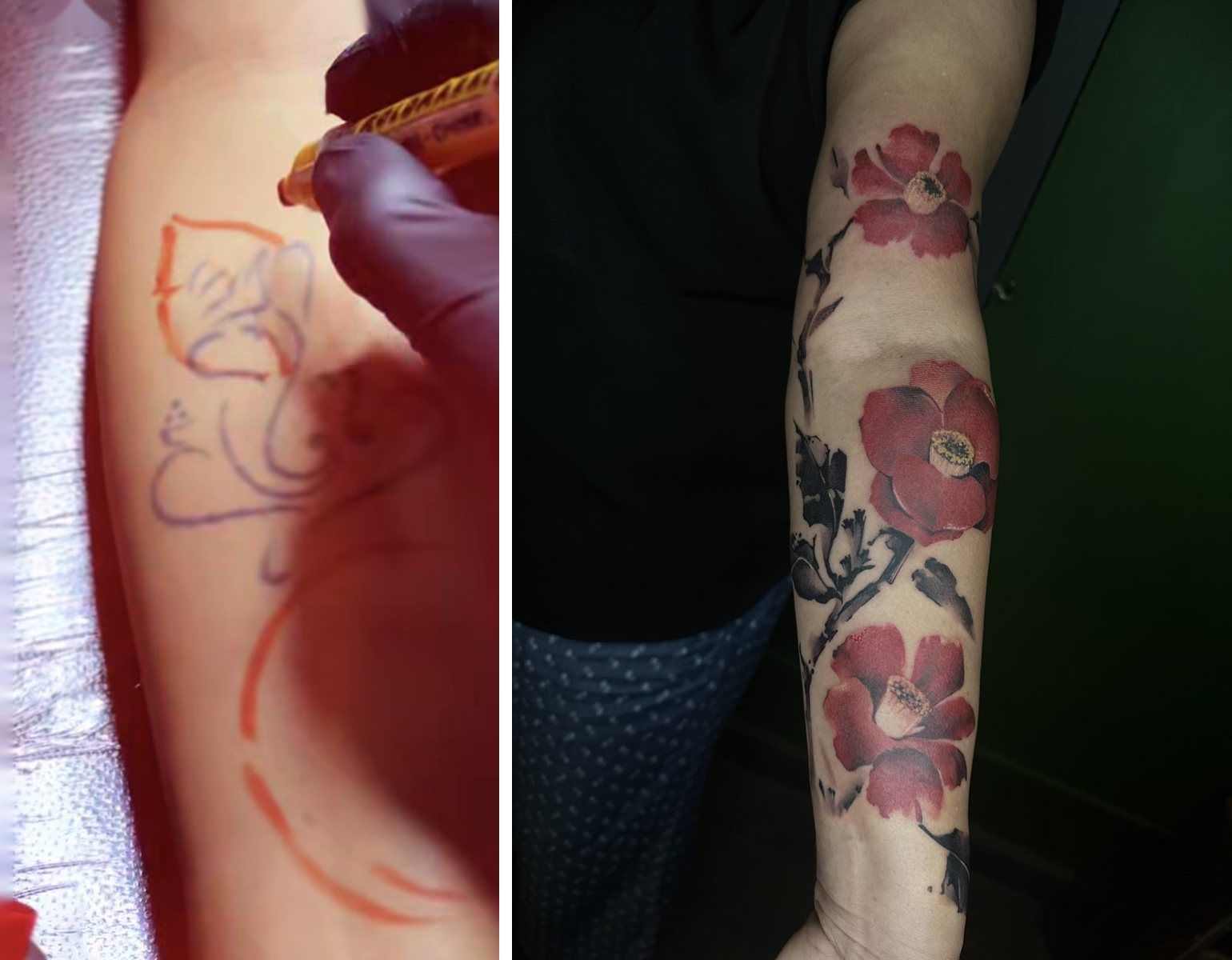
Can my tattoo be covered?
Can any tattoo be covered up?
I believe every tattoo should be a matter of pride. I'll try my best at covering it up once I see it and can assess the task at hand.
Should I get laser removal first?
I do not recommend laser. The results can be subjective, and in some cases I've witnessed horrific backfires: scar tissue and other complications, which can take up considerable time, money, pain and mental distress.
Does a cover-up have to be bigger and darker?
Yes. But the overall appearance of the tattoo depends on the style of artwork we're executing. There needs to be a darker area over the part being covered, and the overall piece can still look very delicate and whimsical if you prefer. Size and colours depend on your preferences and the specific placement, which we consider during the consultation. This is also one of the biggest reasons why designing only happens in person. It's a collaborative, discussion-based process between the client and the artist.
What do you specialise in covering?
My cover-up technique has proven especially good on tattoos with skin damage, where the ink slightly rises above the skin. I also have expertise in correcting tattoos that need sound technical knowledge, like low contrast issues and fucked up details.
What do people get wrong about cover-ups?
Designs. Unrealistic goals or expectations. You can't cover up a massive black tattoo with fine line work or AI-generated image recommendations. It's a collaborative effort that takes time, and trial and error in planning. A point to remember: covering up a messed-up cover-up job becomes almost impossible at a large scale. Spend your effort with a professional who has proved to be good at it.
Cover-up & correction stories
Cover-up & correction stories →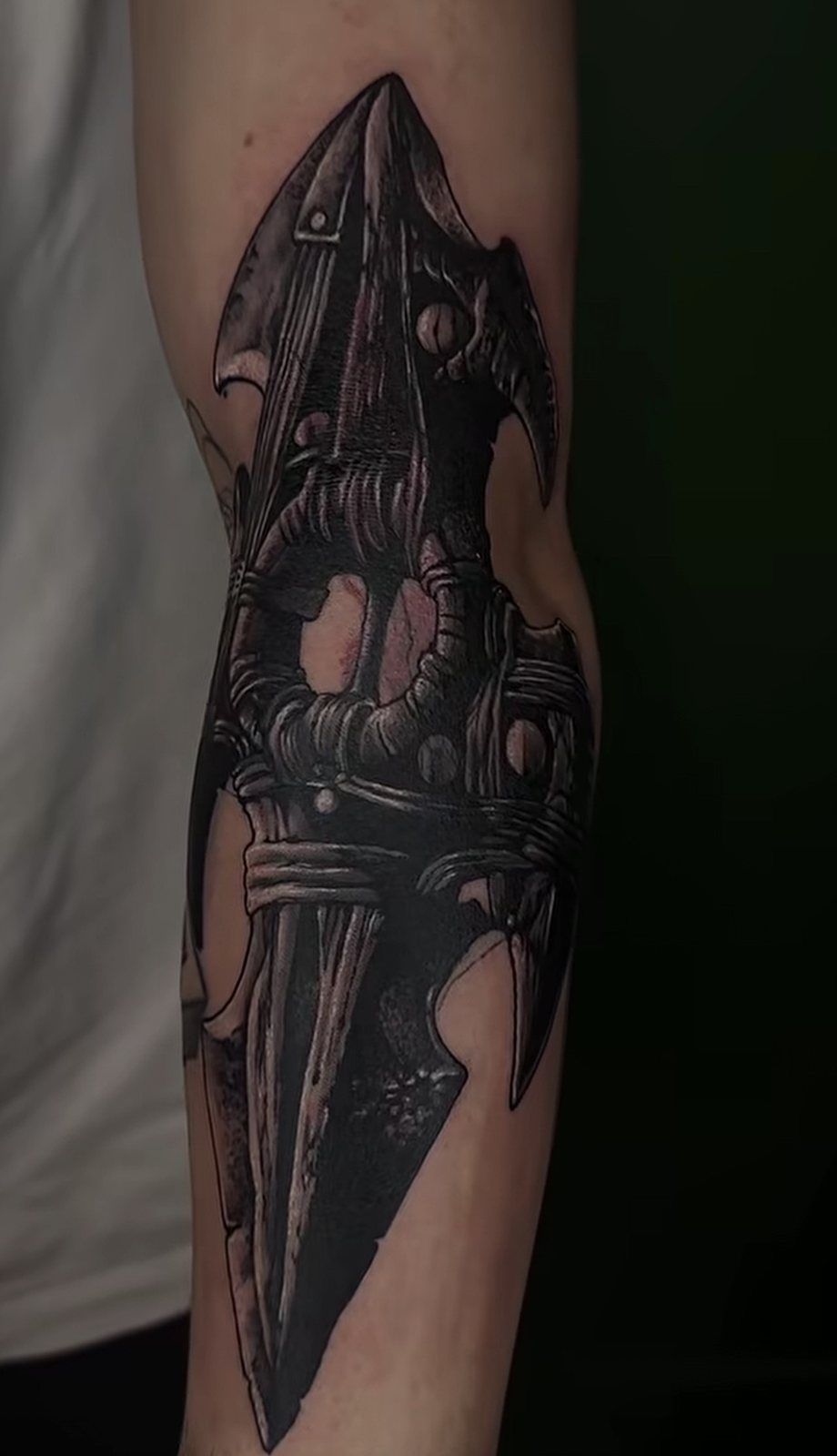
Biomech blade cover-up, forearm
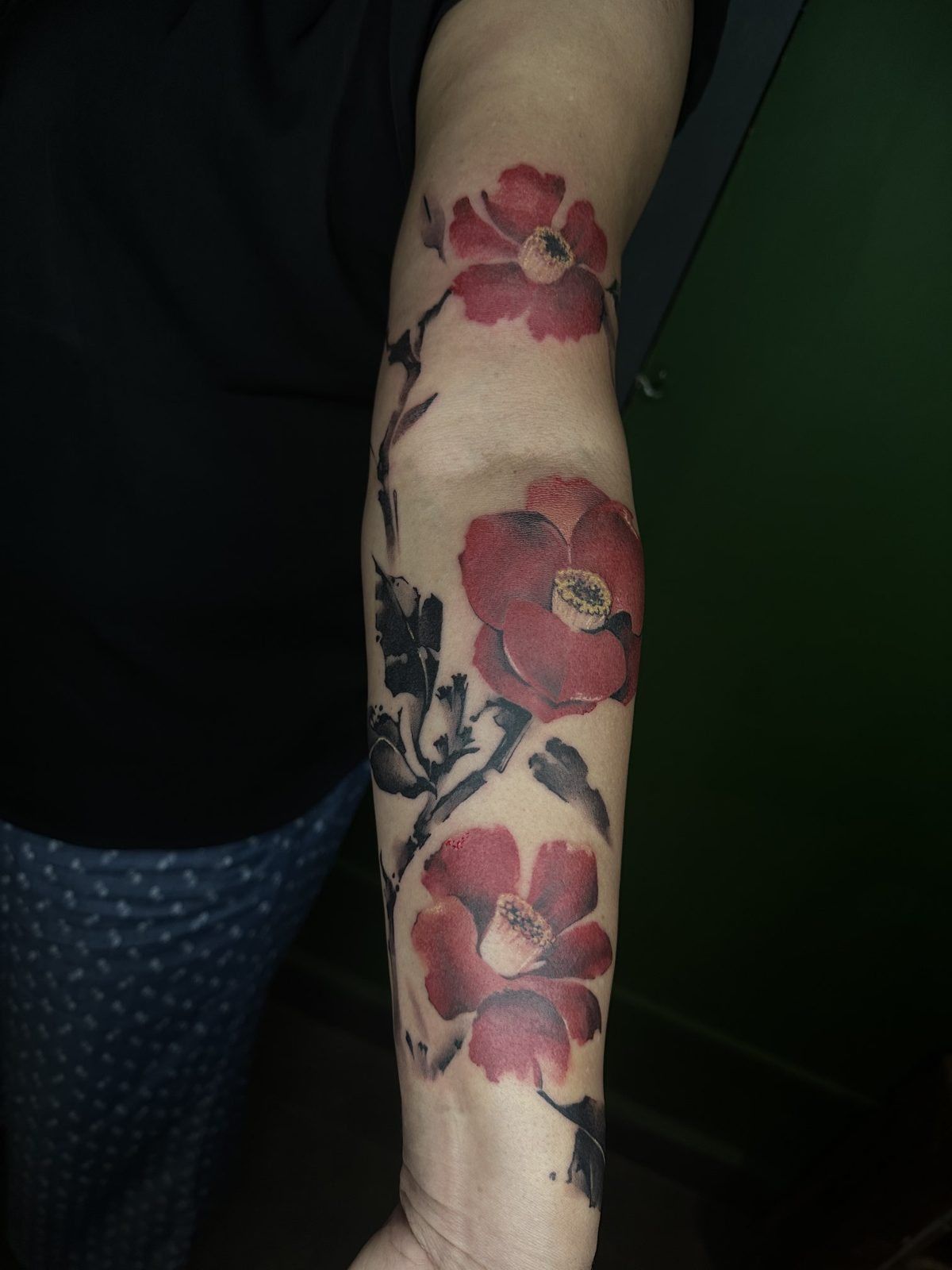
Camellia cover-up, forearm
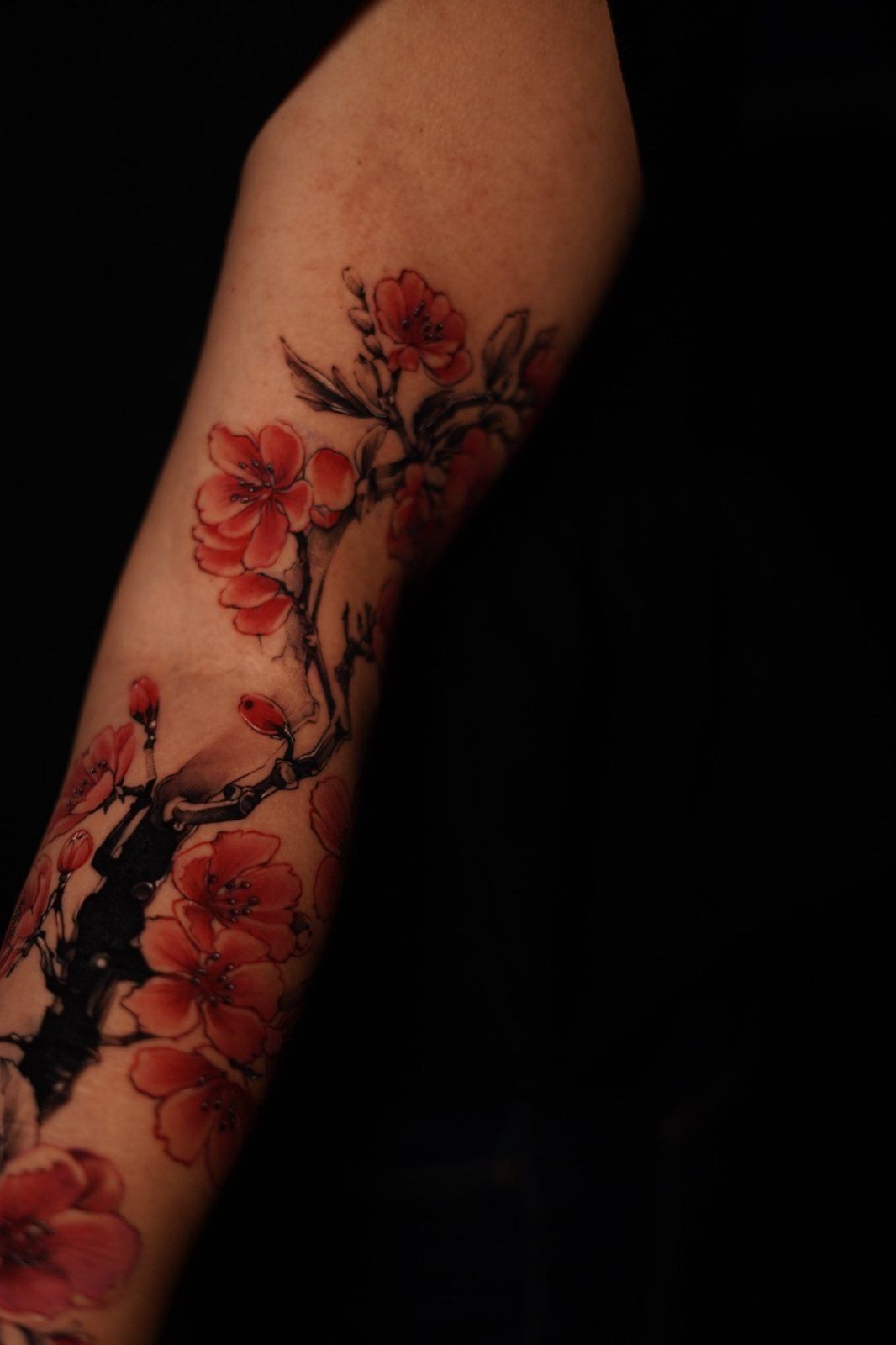
Cherry blossom cover-up, forearm
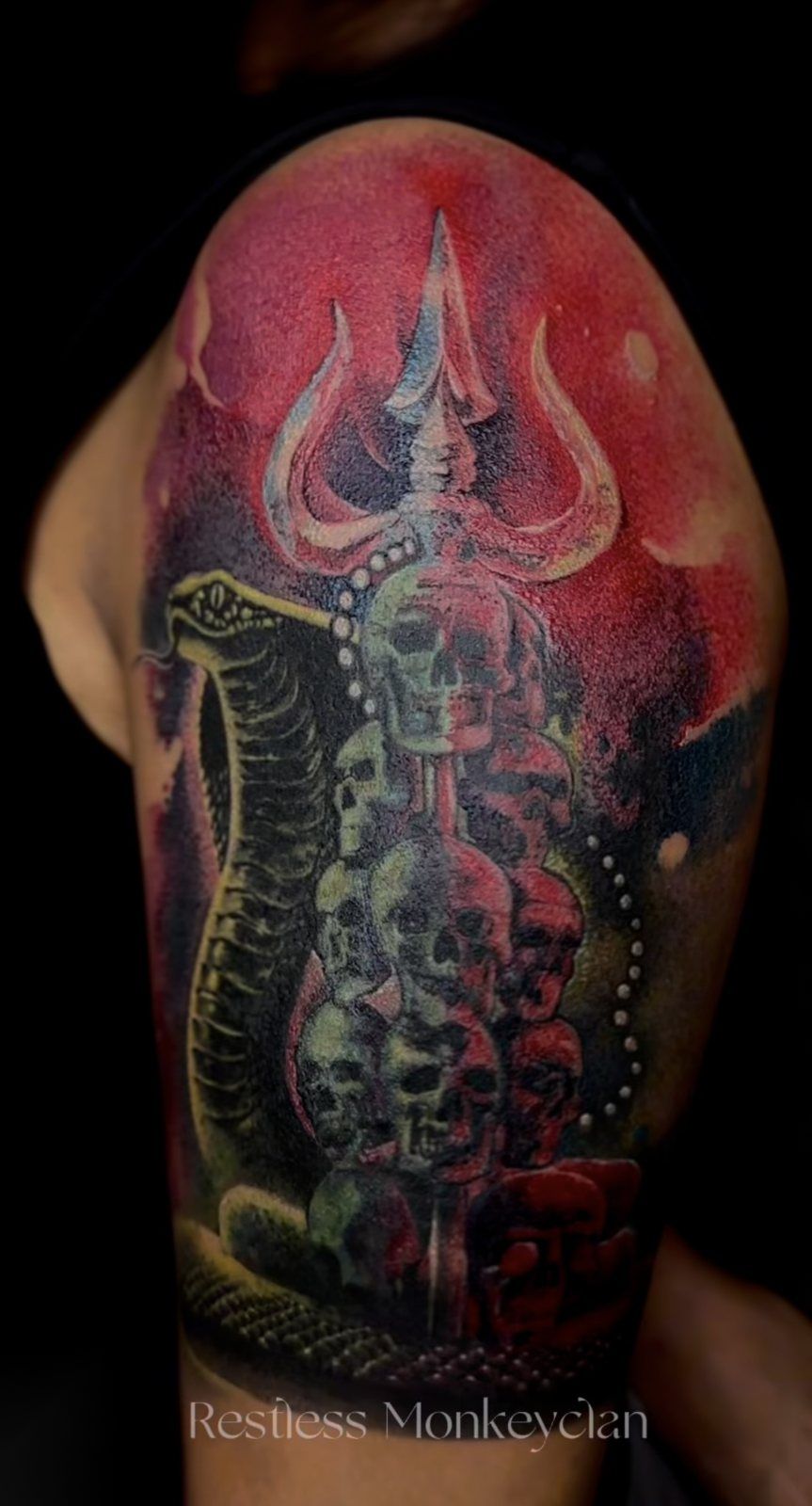
Shiva trishul cover-up, upper arm
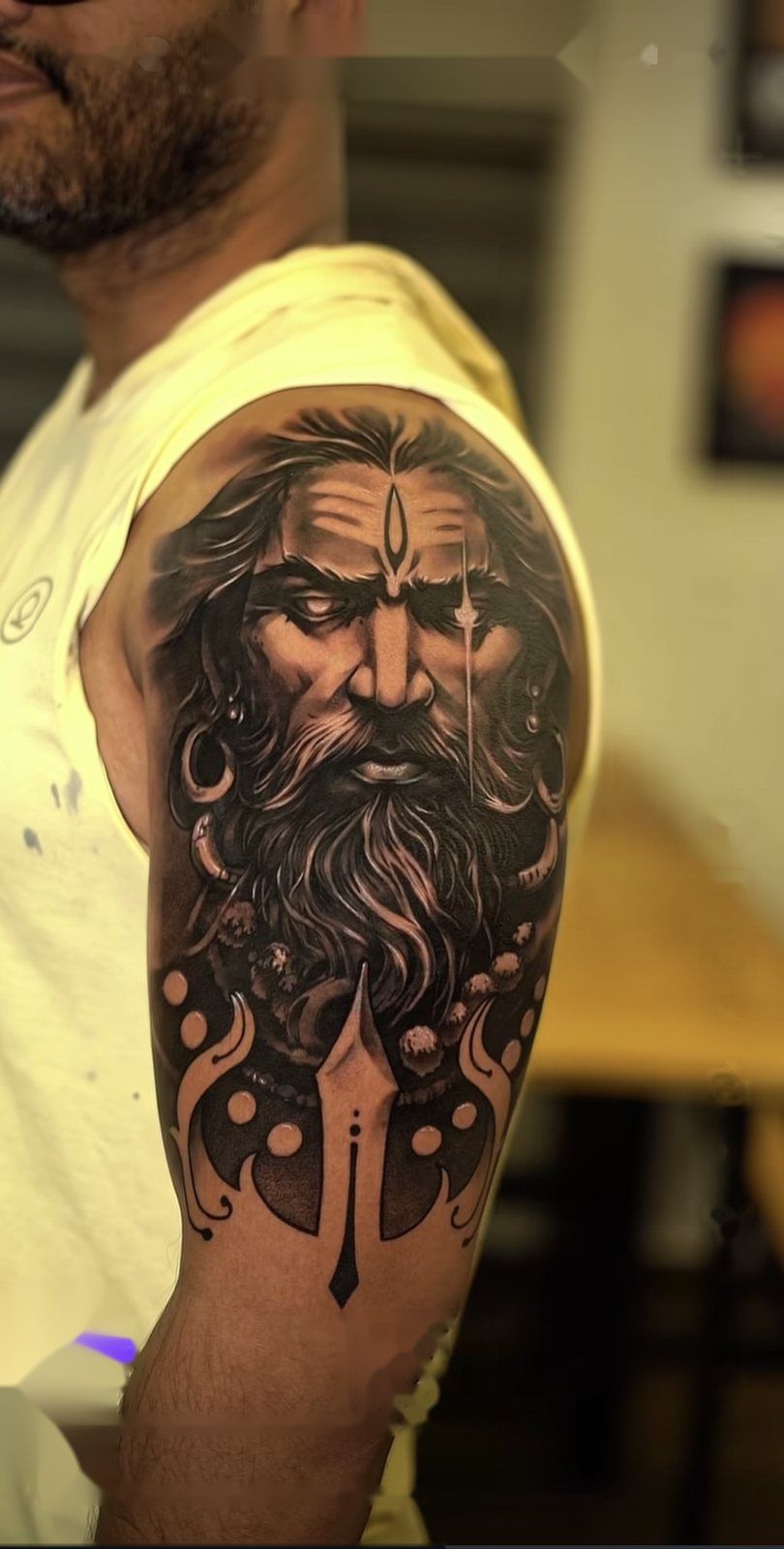
Prasanth's Kaal Bhairav cover-up
- Placement
- upper arm and shoulder
My own people had their apprehensions when I decided to get a Kaal Bhairav cover-up tattoo. Honestly, I had my doubts too. I told Mr. Anoop, the artist, "I've never seen Shiva like this. It doesn't even look like Shiva." He simply replied, "Machane, since we have not seen Shiva…" He left it there. I filled in the rest myself. That was when I became certain I wanted to do it. Fast-forward to today. While I was working out, a devout follower of Lord Shiva approached me and asked, "Is that Kaal Bhairav?" "Yes," I said. He told me he had been meditating, reading Shiva Stotras, and had been wanting a Kaal Bhairav tattoo himself, but was unsure whom to trust with it. So I asked him what he thought of mine. He looked at it and simply said: "It's world class." Coming from someone so deeply devoted to Shiva, it felt like more than a compliment. It felt like a quiet validation of a decision I had once doubted myself.
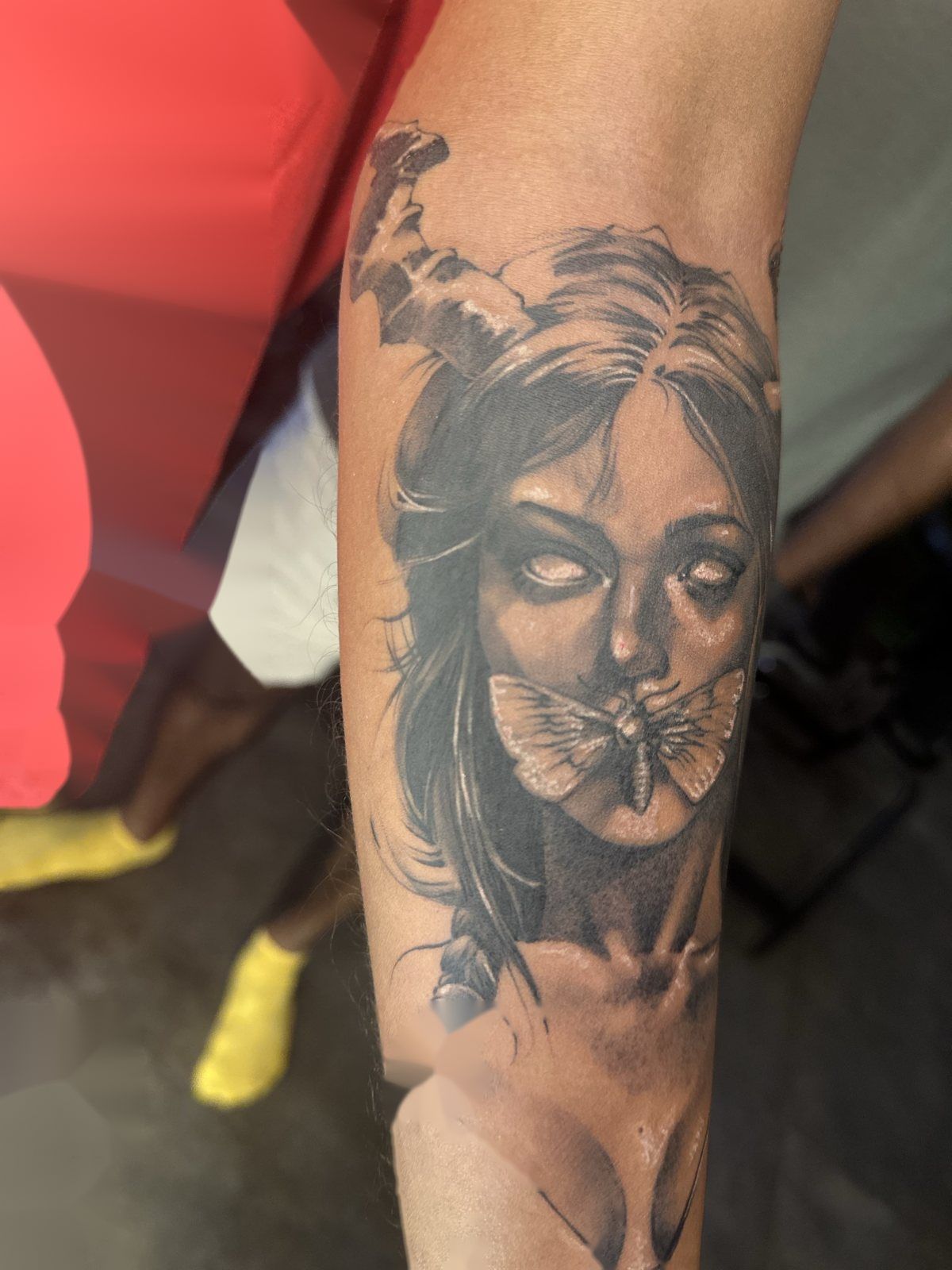
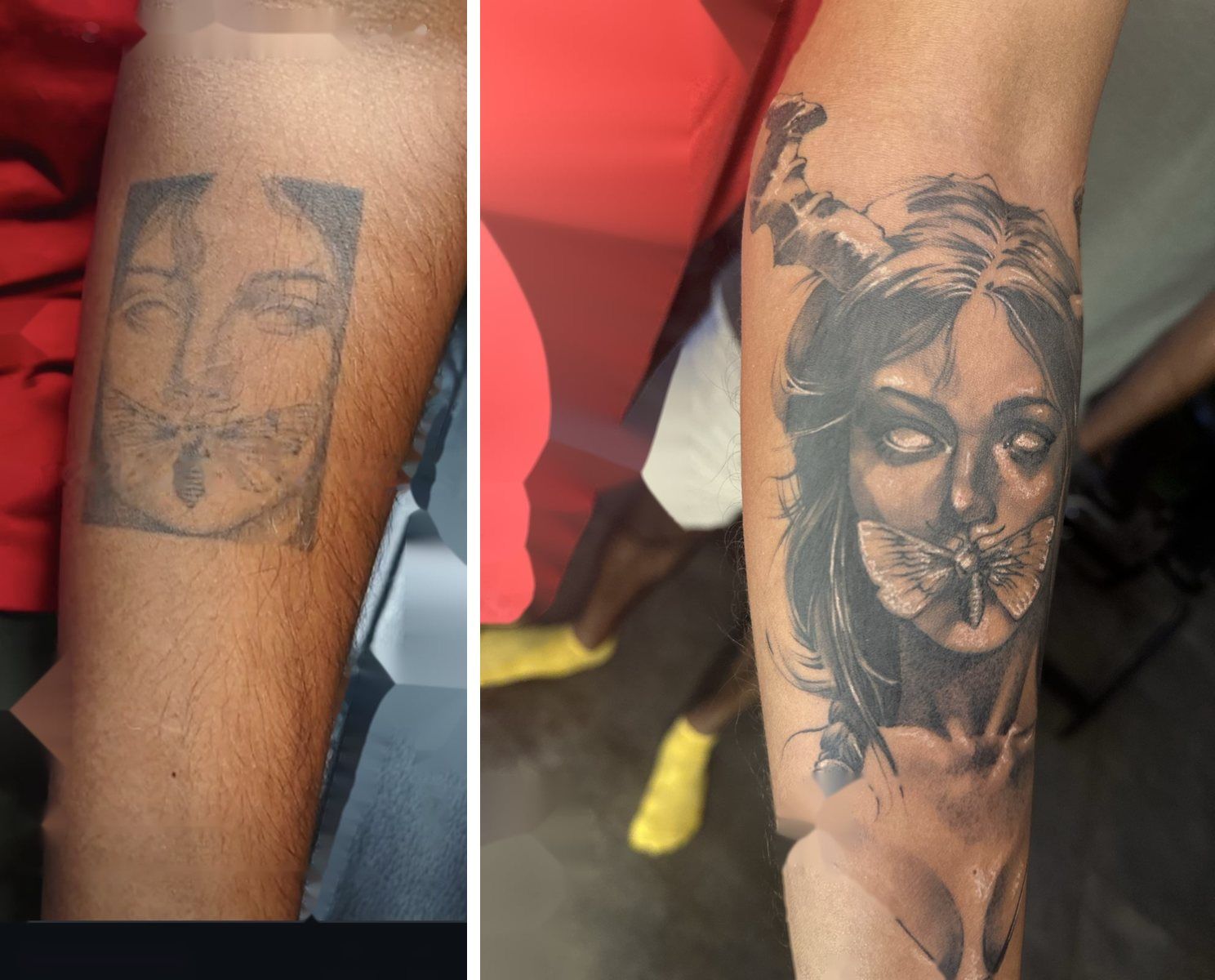
Faded portrait reworked, forearm